Written with help from MinutesLink - free AI meeting notetaker for online meetings.
Written with support from MinutesLink — a free AI notetaker for online meetings.
Traditional meeting minutes were basically just a way to tick a box and say "oh, we've got all this covered". Document who the meeting attendees were, jot down a few key points from the meeting agenda, done. But in the meantime, context got lost, ownership got fuzzy and dependant on who had the best memory or a bit of goodwill to keep things afloat, and follow-through relied on who was actually motivated to follow through on their commitments. Over time, this just created a system that was all too fragile, because it relied on people to remember what they were supposed to be doing.
As teams grow, and the work becomes more complicated, this weakness becomes painfully obvious. Projects start to stall, and then there are discussions that repeat themselves over and over and over and over again, and then teams have to spend time re-aligning instead of actually getting stuff done. And it's all because you haven't got a clear link between what gets written down in the meeting and actual project objectives or an actionable project implementation plan that teams can follow.
Action items are supposed to be the magic glue that turns conversations into execution, but in so many cases, they just exist in a vacuum. They get written down without any real context as to why they're important, or what's going to happen to them next, or what the bigger picture actually is - and that's when they just flounder and fail to ever actually make it into the real work. But teams aren't lackadaisical - they're just missing a structure to work with.
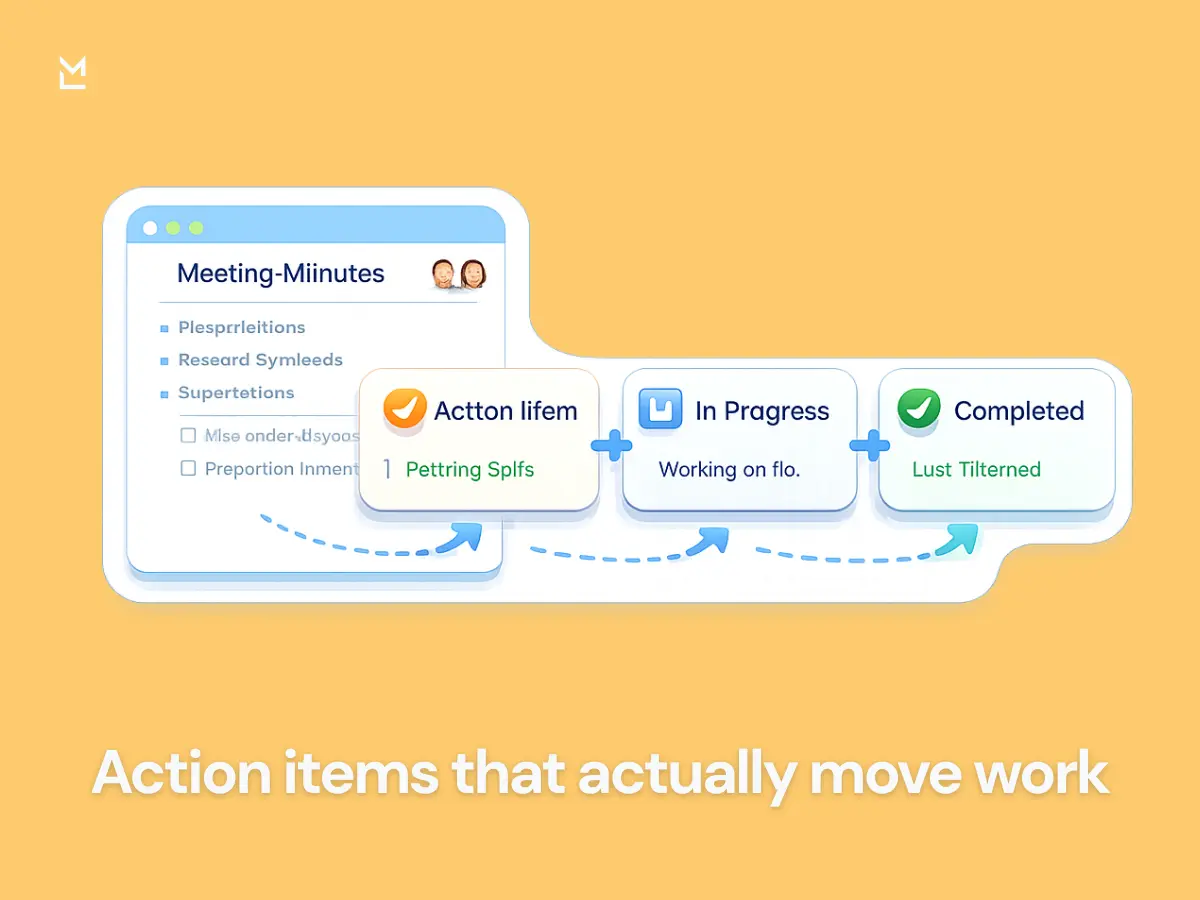
But when you start to treat meeting minutes as a key part of your workflow management and project management software, then action items get real momentum. They're not just a reminder - now, they're a link into task management, follow-ups, and progress reviews. And that's when you start to see meeting documentation become a key tool in your workflow, letting teams move from intention to action without getting bogged down.
The gap between discussion and execution usually appears after the meeting ends. Decisions are made, tasks are mentioned, but the connection between why something was decided and what happens next often disappears. This is where structured meeting minutes make the difference.
Tools like MinutesLink help teams capture decisions together with context, link action items to clear ownership, and keep follow-ups visible across workflows. Instead of relying on memory or fragmented notes, meeting outcomes become part of an execution system that supports progress reviews, accountability, and process improvement over time.
When meeting minutes consistently reflect decisions, rationale, and next steps in one place, teams spend less time re-aligning and more time moving work forward.
Improving processes is often talked about as some sort of big, formal, top-down thing, but really, it all starts in everyday meetings. It's when someone points out that there's a repetitive task that's just wasting time or a team spots a bottleneck that's slowing down delivery. But if you don't capture those moments properly, they just disappear the minute the meeting wraps up.
But when you've got well-structured meeting minutes that keep those insights intact, then you can revisit them later and really start to see them translate into real change. And that's how continuous process improvement goes from being just some empty gesture or some theory to actually working in the real world. This kind of business process improvement helps streamline processes, reduce costs, and boost productivity across business operations.
You don't need to have an implementation plan nailed down in one go - it's a thing that develops over time, through discussion, refinement, and iteration. And meeting minutes play a huge role in capturing this evolution - by documenting each step as it happens, from objectives to resource allocation to responsibilities.
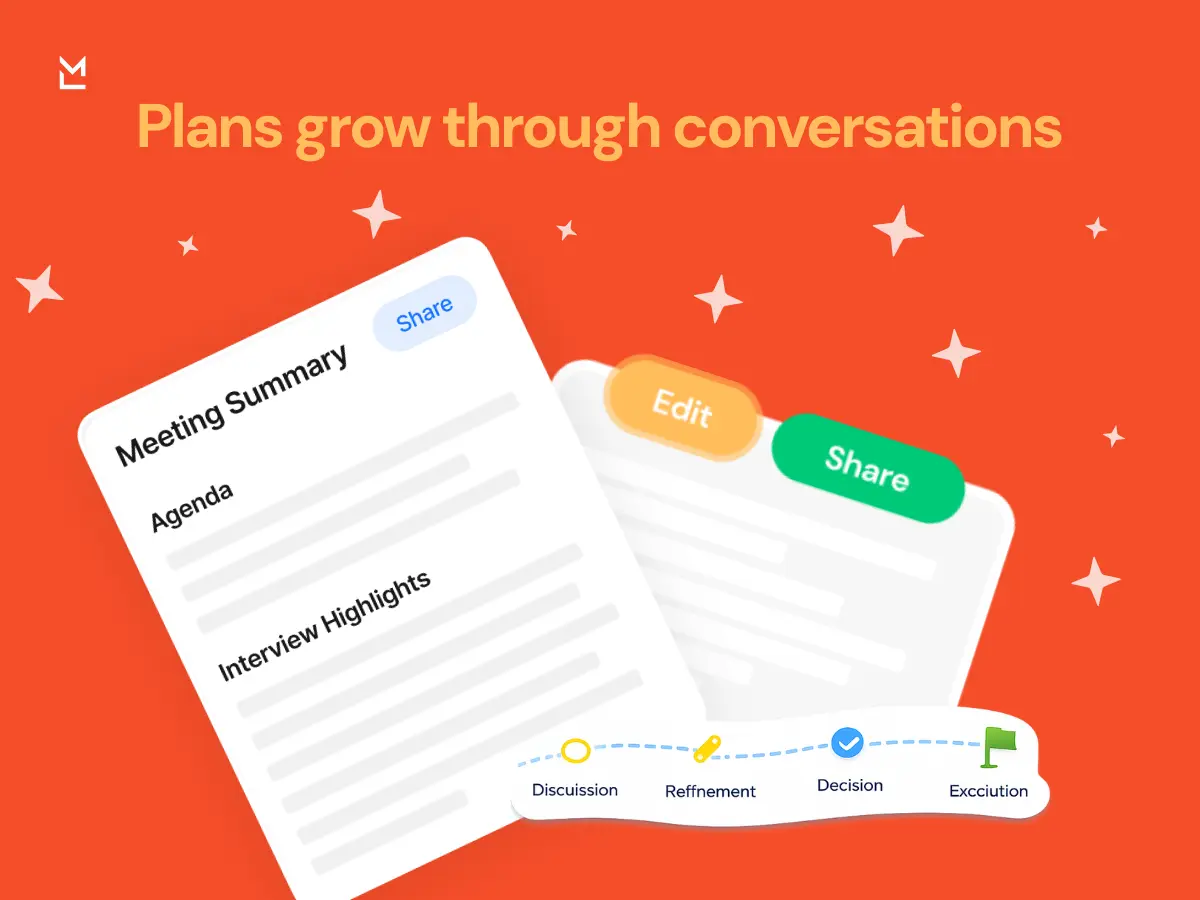
When you've got meeting minutes that reflect that journey, then you've got a real, living project plan - not just some static snapshot. Teams get to understand not just what decisions were made, but why they were made, and that's super important for adapting plans without getting lost. This clarity is a key factor in getting projects to succeed - especially in fast-moving environments where monitoring progress, measuring key performance indicators, and managing potential risks are critical to project success.
The one thing that a lot of people are afraid of when it comes to formal documentation is that it'll lead to micromanaging, but in practice, the opposite is usually true. When you've got clear records of decisions, tasks assigned, and expectations, teams get more autonomy - not less.
A shared, trusted record means that you don't need to keep checking in on every single step, and that you don't need to constantly be chasing down status updates from every single team member. Instead, people know what they're responsible for, and how it fits into the broader picture, and they know where to look to see how they're progressing. This kind of workflow management is about supporting accountability without creating pressure, so that people can just get on with the work.
It's hard to see where you are if you don't have a shared baseline - but meeting minutes can serve as that official record when they're consistent and accessible. They capture key points, decisions, and changes in direction - and that makes it a lot easier to see how you're doing over time.
By revisiting past meeting minutes, teams can start to see patterns in the way that work unfolds - they can spot areas where projects tend to stall, or where risk assessment fell short, or where market changes forced unexpected adjustments. And that's when you start to see meeting documentation become a key tool for learning and continuous improvement. It also serves as a valuable reference point for future reference, helping key stakeholders stay aligned with project outcomes.
Improving business processes is all about getting a real look at what's going on in your organisation - not just how things are supposed to work on paper. Meeting minutes are a big part of this. By documenting the real discussions (the good, the bad and the ugly) about business processes, constraints and trade-offs, you can get a much better picture of what's really going on.
When you've got that info preserved and can go back and revisit it, your teams can do some really realistic process mapping. They can identify bottlenecks, evaluate potential solutions, and actually make some real progress based on the evidence - not just make some educated guesses. And over time, that leads to much more reliable outcomes and better alignment between strategy and execution.
Leveraging technology can make a real difference when it comes to meeting minutes. It can automate repetitive tasks involved in documenting meetings, keep minutes up to date as you go along, and make it easy to share and track progress. It's like having a whole admin team at your beck and call - which is exactly what you need when you get to a point where manual minutes just become a total pain. Important details get missed, the quality of the documentation varies wildly and all the good insights get wasted. But with tech to help out, you get accurate structured documentation that your team can actually rely on.
Tools like MinutesLink can help by making sure meeting minutes are captured consistently and shared easily, integrating with popular platforms like Microsoft Word and Google Docs. No more spending ages recreating the context, no more chasing people up for clarification - just get on with the job at hand. And the best bit is, the technology does its job without dominating the whole process - which is exactly how it should be.
Lots of people get the wrong idea about accountability - they think it's all about being blamed. And yeah, if meeting minutes are used badly, they can feel like a bit of a surveillance thing. But if you use them right, it's actually all about fairness. A clear shared record of what was agreed, what information was out there and how decisions got made - that's the key. That kind of transparency just helps to shift the conversation from "who's to blame" to "what can we learn from this".
Teams can then focus on making the process better, rather than just defending what they did in the past. And over time, that builds trust, makes everyone work better together and just makes it more likely that the project is going to be a successful project.
But meeting minutes on their own aren't really that useful - it's only when you connect them up to what's really important for the business that they start to make a real difference. When the documentation is all about the strategic priorities, then it's actually helping to get everyone on the same page. People understand what they're doing, and why it matters.

That connection between meeting minutes and business goals turns them into a bridge between what people are doing day-to-day and the long-term strategy. It's all about allocating available resources better, making sure everyone has a clear idea of the project scope and making sure the decisions people are making are actually good ones.
What we're talking about here is more than just making the meeting minutes better. It's actually creating a kind of strategic memory that captures how decisions get made, not just what the decisions are. Over time, that memory helps you to plan better, execute better, and just build a more resilient organisation.
When meeting minutes are treated as a reference point for the future rather than just a historical archive, teams waste less time going over old debates and more time moving forward. Strategic planning becomes a bit more forward-looking and a bit less reactive, and business management just gets a bit calmer and more focused.
Meeting minutes don't actually create results on their own - but when you use them as part of a proper implementation process and action plan, then they can be one of the most powerful tools a project team has. They turn conversations into commitments, action items into actual progress and intentions into actual execution.
Used properly with a tool like MinutesLink to help out, meeting minutes go from being this afterthought at the end of a meeting to becoming the real beginning of progress. That's when documentation stops feeling like just busywork and starts to actually drive business growth and improve customer satisfaction.
Writing meeting minutes isn't something about rewriting the whole conversation word for word. The goal is to capture what actually matters after the meeting is over. A good set of minutes zero's in on the decisions that were made, the key points that were discussed, and what needs to happen next - not every single sentence that was thrown out there.
Top-notch minutes are written with the future in mind. You should be able to read them later and instantly get the idea of what was agreed on, who's responsible for what, and why certain choices were made. When meeting minutes do that, they stop being a pointless exercise and start becoming a useful tool that your team actually relies on.
Improving your work processes is all about making the way you work better over time. It's about taking notice of where things are slowing down, getting all confusing, or causing unnecessary stress - then doing something to fix it.
Most process improvements don't start with some big meeting in a fancy boardroom. They start from everyday conversations when someone says something like, "This bit always takes too long," or "We're constantly patching up the same issue again." If those moments get captured and acted on, lots of small improvements start to add up to smoother workflows, better results, and a lot less frustration.
Workflow management is the way a team organises work from the minute the idea pops up right through to the moment it gets done. It's about making sure tasks move forward in a clear and predictable way, rather than getting bounced around chaotically between people and tools.
Having a good workflow management system doesn't mean you need to control every single step. It's about creating enough structure so everyone knows exactly what they're in charge of, how their bit of the job fits into the bigger picture, and where to look if things change. When workflows are clear, people spend less time chasing updates and more time actually getting things done.
Action items are the link between talking and doing - they're the specific things that come out of a meeting and turn discussion into progress.
A good action item isn't too vague. It's got a clear owner, a purpose, and a sense of direction. When action items are written up well and tracked properly, they help stop meetings from turning into endless loops of the same conversations. Instead, they give you momentum - everyone knows exactly what needs to happen next.
An implementation plan is the practical roadmap that turns an idea or decision into reality. It outlines how something will actually be done, rather than just leaving things at the level of intention.
In real teams, implementation plans hardly ever just magically appear fully formed. They evolve over time as meetings happen, priorities shift, and new information comes in. When meeting minutes capture all those changes, the implementation plan becomes a useful living reference - something teams can go back to when they need clarity, alignment, or a reminder of why certain choices were made.
Trusted & Secure


.webp)



.webp)
.webp)
.webp)
%201%20(2).jpg)