%201%20(2).jpg)
Written with help from MinutesLink - free AI meeting notetaker for online meetings.
Written with support from MinutesLink — a free AI notetaker for online meetings.
Team building is often given the backseat treatment, but the truth is it has a huge impact on a team's performance. When team members can't communicate clearly, projects slow down, misunderstandings multiply and accountability gets fuzzy. It's not about motivation - it's about a team's systems.
Effective team building creates a shared understanding between team members. It helps people get on the same page about expectations, learn how others think and build trust that translates to real work. This is especially important for remote teams where communication gaps occur more often because team members aren't physically present.
Day in and day out, consistent team building helps create team cohesion and makes the whole team work more efficiently. It's not about some big team building bash - it's about creating habits that actually improve how the team operates every single day.
Not all team building activities are created equal. The best team building activities are designed to improve communication skills, strengthen collaboration or develop problem-solving skills.
Effective activities have a few things in common. They're simple enough to run during a team meeting, are relevant to real work scenarios, and are engaging without being forced. They also work for teams of all sizes, from small teams to the entire crew.
Another thing to consider is time. Quick team building activities that take just a few minutes can often deliver better results than longer sessions. People stay engaged, and the activity doesn't feel like a disruption to work.
The goal is not to entertain - it's to create a fun way to improve how the team works together. Here’s a quick breakdown of how different types of team building activities work:
At its core, team building is all about improving communication. When team members understand each other better, they communicate more clearly and make fewer assumptions.
Activities that get team members explaining their ideas, giving feedback and collaborating under a time limit help these skills develop naturally. Over time, this leads to better alignment during team meetings - both in-person and virtually.
Accountability gets a boost too. When expectations are clear and communication is strong, following through on tasks becomes easier and teams become more reliable without needing constant supervision.
This is where tools like MinutesLink come in handy too. When your team has clear summaries, action items and decisions from every team meeting, it reinforces the communication habits built during team building activities and keeps everyone on the same page.
Picking the right activity depends on your team's goals and structure. A virtual team will need different activities than an in-person team, and a hybrid team will need a mix of both approaches.
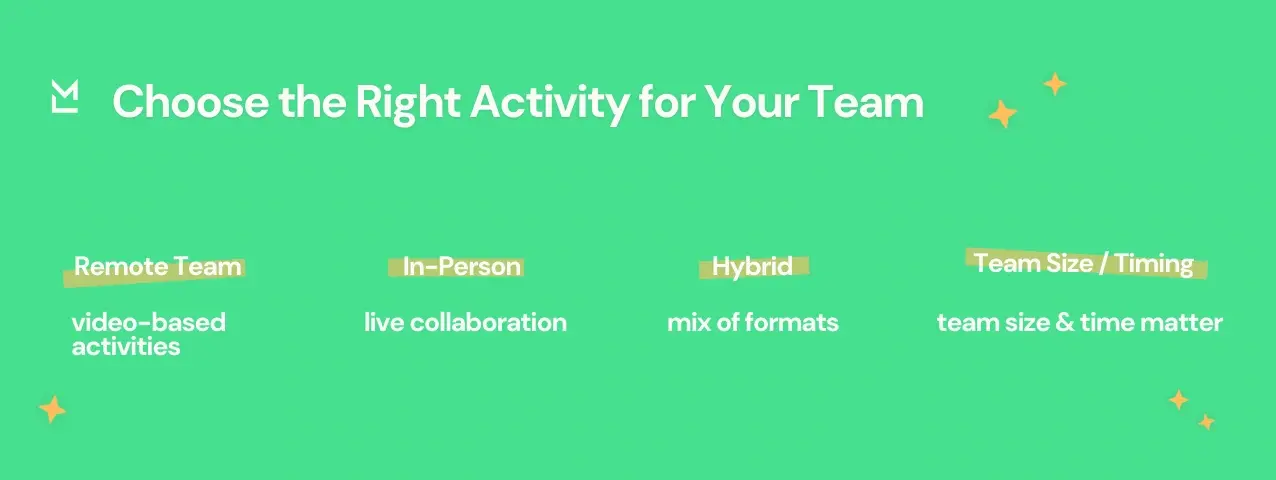
If your team is struggling with communication, focus on communication-building activities that require discussion and clarity. If collaboration is the issue, choose activities that require problem-solving and teamwork.
Also consider team size. Some activities work better in small groups, while others are better suited to the entire team. Matching the activity to your team's dynamics is the key to making it effective.
And don't forget about timing. A few minutes at the start of your next team meeting can be enough to build momentum without overwhelming the team.
Remote team building requires a slightly different approach. Without a physical presence, it's harder to build connections naturally.
Virtual team building activities should be designed for video conferencing. They need to be structured, interactive and easy to follow on a video call. Activities like virtual team-building games, discussions or collaborative challenges work well in this format.
For hybrid teams, balance is everything. You want activities that include both remote employees and in-person participants equally. This helps avoid disconnect between different parts of the team.
Regular virtual meetings combined with intentional team building help remote workers feel more connected and engaged.
Team building activities create better communication habits, but those habits need to be reinforced in everyday work. That's where MinutesLink becomes really useful.
After a team meeting or group session, MinutesLink automatically captures key points, decisions and action items. This means every team member understands what was discussed and what needs to be done next.
For remote teams and hybrid teams, this is huge. It reduces misunderstandings, keeps remote team members on the same page, and helps the entire team stay accountable.
In short, team building activities improve how people communicate, and MinutesLink ensures that communication is documented and actionable.
You see teams around you going through team building activities with regularity, but when it comes down to it, who's really checking to see if all that team bonding is actually doing some good for communication and accountability? Without any real data to go on, even the most well-intentioned team building exercises can feel like they're doing their job, when in reality they're not actually making a dent.
First things first, take a closer look at how communication is playing out in team meetings and virtual get-togethers. If you notice team members breaking down their ideas in a way that's crystal clear, aligning more quickly, and not having to ask a million clarifying questions, that's a pretty good sign that team building is actually working its magic. And if misunderstandings are decreasing over time, that's probably one of the most solid indicators out there that you're making progress.
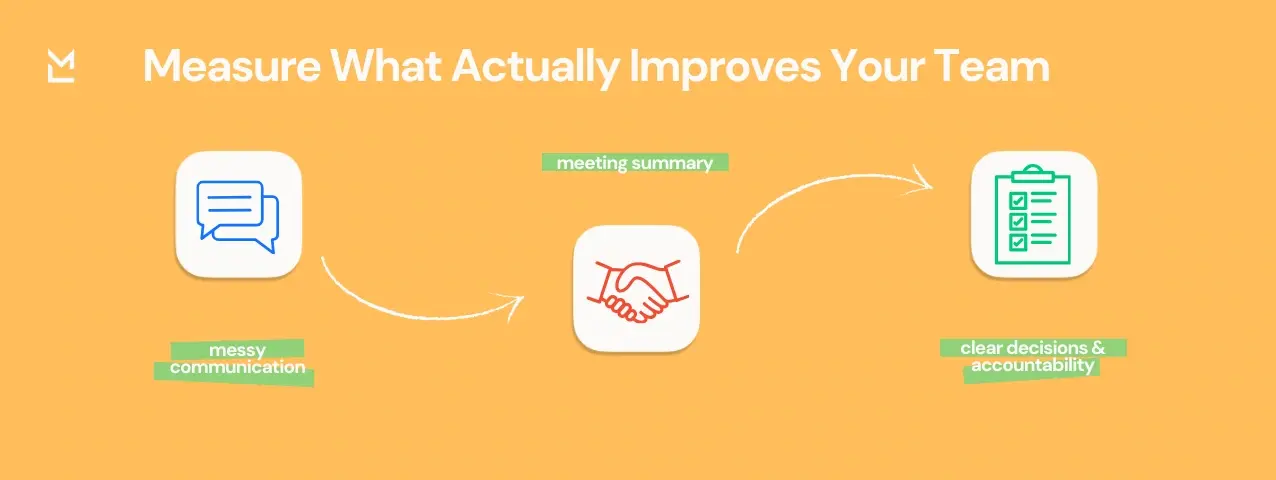
But accountability is just as big of a metric. Teams need to start hitting their tasks more consistently, with clear ownership being assigned after each team meeting. That's where tools like MinutesLink come in handy, as they help track action items and decisions, making it way easier to see if your team meetings are getting more structured and actually driving some real results.
Below are some Team Building activities for work that are designed to not just keep your team engaged but also improve their communication skills, strengthen that team cohesion & build real accountability. That's whether you're working with a team in person or remotely.
This one is one of the easiest team building activities out there - but it's also one of the best. It's especially good for new teams because it gives everyone a chance to open up in a relaxed way. Each team member shares two true stories and one totally made-up story. Then everyone else tries to guess which one is the lie. This activity is always good for some fun chatter, but it's also a great way to get everyone on the same page and improve communication. Plus, it's a great way to get people feeling more connected as a team in just a few minutes.
Put your team on a desert island and see how they would survive with just a few limited items. Right away, this activity creates tension & disagreement because everyone has different ideas on what's most important - and they have to explain their choices & convince the others they're right. It's a great way to get your team working together on a problem & figuring out how to collaborate. Plus, it's a great activity for big teams or small ones - and works just as well in person as it does online.
Each team member does a quick 1-minute update on what they're working on, what they've accomplished, and what's holding them back. This activity is super practical - it makes accountability a part of everyday work. It also gets everyone talking clearly and concisely - and helps you avoid wasting time on unnecessary chit-chat. Plus, it's easy to use tools like MinutesLink to turn these updates into action items & summaries, so you can make sure everyone is on the same page.
One team member describes a picture, while someone else tries to draw it - without looking. This is a fun way to see how easily communication can break down when things are unclear. It's a great idea to get your team thinking more precisely, and giving clear instructions. Plus, it's a super effective way to build communication skills, especially if you're working with a team remotely.
Virtual coffee chats match up remote team members for a quick chat about anything but work. This might sound simple - but it's actually super important. When people feel more comfortable with each other, they communicate more easily & naturally. This helps build a stronger company culture & connection - even if everyone's not in the same office.
This is a fun activity where you give your team a problem to solve & see how many ideas they can come up with in just a few minutes - without judging them, of course. It's a great way to get your team thinking creatively - and working together under pressure. Plus, it's a great way to get your team energized in a virtual meeting.
One team member explains a complicated idea in the simplest way they can - and the rest of the team asks questions until they get it. This activity is a great way to teach your team how to talk clearly, without getting bogged down in jargon or complicated stuff. It's also a great way to make sure everyone's on the same page when it comes to big ideas or projects.
Virtual escape rooms are one of the most fun team building activities out there - because they require teams to solve puzzles together in a super short amount of time. This is a great way to build problem-solving skills, communication, and teamwork skills - all at the same time. They're super effective for remote teams, and can even be used in-person.
Each team member shares something personal or something they're working on. This is a great way to make your team feel more connected & human. Plus, it's a great way to build trust & team spirit - which is essential for good communication.
And finally, we have the Problem Pitch - where your team pitches a real business problem, and works through how to solve it. This one is great because it takes all your team's learning & ideas from other activities, and puts them into real-world action. Plus, it's a great way to see how your team's learning has really added up. Each team member shares a real challenge they're facing at work, and the rest of the team throws out ideas and possible solutions - which makes this activity super useful for projects everyone's already got on the go. It combines team building with some real problem solving and encourages collaboration, really makes you think strategically and share what you know. This is one of the top team building activities for work because it delivers results right away and at the same time improves communication and teamwork.
Team members explain another person's job and what they're responsible for, which gives everyone a clearer understanding of how their own work fits into the bigger picture and reduces mix-ups between different parts of the team. This activity is a great way to improve team dynamics by showing people how their work all connects together. It's especially useful for new teams or when onboarding new team members - it really speeds up the process.
At the start of a team meeting, each team member shares an emoji that shows how they're feeling, which only takes a minute or two but helps the team stay in sync emotionally. This activity is especially useful for remote teams, where it's harder to pick up on emotional cues - and it encourages people to be open and aware of how others are feeling.
We divide the team into small groups and give them a topic to debate, asking each group to make a case and present their arguments clearly. This activity helps improve communication skills, critical thinking and being able to articulate your ideas under pressure - and it also encourages people to respectfully disagree with each other, which is super important for team dynamics.
Before sharing ideas with the group, team members write them down individually, which makes sure everyone gets a chance to contribute and not just the loudest voices. This activity improves collaboration by giving everyone a chance to share their ideas and helps come up with a more diverse range of solutions. It's especially great for introverted team members or remote employees who might not normally get a say.
Virtual happy hours give remote team members a casual chance to hang out, relax and just be themselves without feeling like they're working. It helps to take away some stress and improve team morale - and while it's basically just a social thing, it actually plays a big role in building team cohesion.
We get team members to move around and have one-on-one conversations for a few minutes at a time - which helps them connect with more people across the team and not just their immediate colleagues. This activity improves communication across different parts of the business and helps make the whole team feel more connected.
We put a real work scenario on the table and ask team members how they would handle it, which encourages discussion and helps get everyone on the same page when it comes to decision making. This activity helps improve problem solving skills and gets teams ready for real-world challenges.
A team quiz combines a bit of friendly competition with team work, getting team members to work together to answer questions and solve challenges. It's a great way to boost team morale and also improve teamwork and communication.
Each team member adds a sentence to a shared story, which encourages creativity, teamwork and collaboration in a really fun way. It helps teams get better at building on each other's ideas and staying engaged.
Team members give each other structured, constructive feedback, which improves communication skills and builds trust and a culture of continuous improvement. It also helps keep everyone accountable.
We give the team a list of tasks and ask them to work together to decide the priority, which helps everyone get on the same page when it comes to priorities and improves decision making. This activity reflects real work situations and actually strengthens collaboration.
Team members share photos of their workspace and others try to guess who they belong to, which is a fun way to get to know each other a bit better and feel more connected. It works especially well for remote teams.
A virtual book club encourages team members to discuss ideas, share perspectives and engage in deeper conversations - which really improves communication skills and builds a stronger team bond.
Teams work on small projects or ideas over a set time - which encourages innovation, collaboration and problem solving. This activity is one of the most impactful team building activities for work because it combines learning with real results.
Each team member suggests one way the team or workflow could be improved - which creates a culture of feedback and accountability. It helps the team keep evolving and improving communication and collaboration over time.
The biggest problem teams face is trying to cram all their team building into one single event. But the real way to get value out of it is to incorporate team building into your daily routine - making it a regular thing.
Start with something simple. Throw in one team activity at your next team meeting and take a close look at how the team responds to it. Then as you go along, try out different things and figure out what works for your teams unique personality.
It's also super important to connect any given activity to actual work goals. After each one, take some time to discuss what you learned and how it can be applied to real life on the job. That way the team starts to see the value in what you're doing.

Team building activities shouldn't feel like some boring thing you have to put up with at work. When done the right way, they start to feel like just another part of how you work together - not something that's imposed on you.
The bottom line is really simple - you want a team that gets along, communicates clearly, and actually takes ownership of what they do. When that happens, performance improves naturally.
And when you combine that with tools like MinutesLink that help you keep track of what was said and what needs to get done at your team meetings, you create a system where communication actually drives results.
The best team building activities at work aren't the ones that just try to entertain you - its the ones that help your team actually work better together. Chances are if you're doing something that mirrors real work situations, like problem-solving challenges, or some form of team communication exercise, you're probably going to get a lot more out of it than just some fun you'll have. And the key to all of this is helping team members interact, share ideas & get on the same page - especially during meetings, or video calls.
If you're a remote team, you want activities that'll really work for you. That usually means going for virtual escape rooms, online brainstorming sessions, or structured discussions that need a lot of collaboration - all of which can be easily run over video conferencing. So long as they're interactive, and don't take up too much of your time, then you'll be staying engaged with your team, even while working from home.
Team building activities let team members practice explaining their ideas & working together in a structured way - which gives them a lot of practice communicating clearly, and therefore a lot fewer misunderstandings during actual work. Accountability improves because team members start getting a lot clearer on what everyone is supposed to be doing, making it a lot easier to follow through on work commitments after each meeting.
Meetings can be a drag - so you need something that'll get the team going & keep them engaged, without taking up too much time. So short activities like one-minute updates, icebreakers, or even just a quick brainstorming session will work wonders. Plus, they help get everyone back on track & encourage everyone to participate.
For remote teams, you want activities that bridge that gap that comes with working from home. Examples of what works well include virtual coffee chats, team quizzes, or collaborative problem solving exercises - they help keep everyone connected, improve communication & make sure the whole team stays close, even if you arent all in the same room.
Trusted & Secure


.webp)



.webp)
.webp)
.webp)