%201%20(2).webp)
Written with help from MinutesLink - free AI meeting notetaker for online meetings.
Written with support from MinutesLink — a free AI notetaker for online meetings.
Today's organisations are operating in a crazy fast-paced environment with new technologies coming out all the time, changing customer expectations, and businesses competing with each other all day long. Without a clear goal setting process, teams can easily get sidetracked and end up doing reactive rather than purposeful work. Clear work goals act like a compass that helps people stay focused on the company's success even when things get tough.
When you define your goals properly, you can turn vague ideas like "grow the product" into measurable objectives like "increase customer satisfaction" or "improve service quality". This makes it way easier to figure out if your business strategy is actually working.
When teams see how their work contributes to the bigger picture, motivation often goes up. Employees understand how their professional goals fit into the broader business strategy, which often increases employee satisfaction and encourages professional growth across the entire organization.
Clear work goals also improve communication skills. Teams with clearly defined goals tend to develop strong communication skills, which helps departments align, reduces confusion, and gives projects the momentum they need to maintain momentum.
Work goals don't usually happen in isolation - they're often designed to support a bigger business strategy that's meant to guide long term success and keep the company competitive in changing markets.
A well-structured business strategy breaks down big ambitions into achievable business objectives. For example, a company trying to expand internationally might set financial goals for different regions. Marketing teams might focus on customer satisfaction while product teams focus on operational efficiency and service quality.
When you align your work goals with strategic priorities, you stay relevant in business competition. When leaders explain how team goals fit into the broader business plan, employees get a clearer idea of what's happening.
Strategic alignment also improves internal processes. Teams start measuring progress more effectively and leaders get some really valuable insights into what drives business success.
Lots of companies struggle because their goals are just too vague - statements like "increase productivity" or "improve performance" sound great but don't give teams a clue where to start.
Clearly defined goals provide direction - they outline what needs to be done, by when, and who's responsible so teams can assign ownership and measure success. These goals often include some quantitative metrics that lets businesses track progress and identify problems before they get out of hand.

When you focus on measurable outcomes, you make better-informed decisions - leaders can evaluate whether their strategies are working or not and adjust if needed.
Clearly defined goals also make people more accountable across business units. When teams understand what's expected of them, they're more likely to own up to their performance goals and contribute to the company's success.
Work goals often connect pretty closely with professional goals and career aspirations. Employees want to see how their contributions are supporting both company growth and their own professional life.
Professional goals might include improving communication skills, expanding technical knowledge or building a stronger professional network. These goals often shape skill long term aspirations that guide a person's professional life.
When companies encourage professional development through growth plans and mentorship programs, they create opportunities for professional success. Employees become more engaged when they see a clear connection between their professional growth and the company's strategic goals.
Encouraging professional goals also helps attract and retain top talent - people want to work for companies that invest in their long term career goals.
Effective organisations balance short term goals with broader long term goals. Short term goals help teams focus on immediate priorities while long term goals guide strategic planning.
Short term goals often focus on measurable outcomes that can be achieved in weeks or months - they might include things like improving customer satisfaction scores, launching new product features or increasing operational efficiency.
Long term goals focus on bigger ambitions like revenue growth, entering new markets or strengthening the company's business strategy. These goals often require sustained effort across multiple business units.
Balancing both types of goals keeps teams focused without losing sight of what's possible over the long haul.
The goal setting process usually starts with leadership identifying strategic priorities - these priorities usually come from the company's business plan, market research and competitive analysis.
Once strategic goals are defined, teams translate them into actionable work goals - this means assigning ownership, identifying measurable objectives, defining time bound milestones and making sure everyone understands how their day to day work fits into the bigger picture.
Clear communication during this process is key - teams need to understand how their daily tasks fit into the broader business strategy.
Effective organisations revisit their goals regularly - they evaluate progress, adjust priorities and make sure teams remain relevant and aligned with the evolving business strategy.
Lots of teams have found the SMART framework to be a great way to keep their goal setting on track - as long as those goals are specific, measurable, achievable, relevant, & time bound that is.
The SMART framework really helps organisations create plans that not only support people's careers, but actually help the business grow & thrive. It stops goals from just being wishy washy statements, and encourages teams to be a lot clearer about what they're trying to achieve.
With SMART goals, it also becomes a whole lot easier to see how you're doing. When you've got clear metrics and deadlines in place, it's way simpler to figure out where you stand.

Even though the framework itself isn't complicated, it's still one of the most effective ways to set work goals in any organisation.
Some businesses rely on the balanced scorecard method to see how they're doing across a bunch of different business objectives. This way of thinking helps organisations measure success beyond just looking at the bottom line.
The balanced scorecard generally looks at areas like customer satisfaction, how things get done inside the organisation, people's learning and professional development, and financial objectives. By looking at these different parts together, businesses get a more complete picture of how they're doing.
This framework is super helpful for businesses that want to look at long term success while still keeping an eye on short term goals. It also encourages teams to think about how different parts of the organisation are working together to make progress as a whole.
For organisations looking for a structured way to track their goals, the balanced scorecard is still a really valuable strategic tool.
Setting goals is only the first step. Teams need to keep an eye on how they're doing so they can make sure their strategies are actually working.
Measuring progress lets organisations see if there are any problems early on. If performance numbers aren't looking good, leaders can make changes before things get really out of hand.
Regular progress checks also give teams a chance to have constructive criticism. When feedback is based on measurable objectives, teams can improve without getting caught up in pointless arguments.
Keeping track of progress regularly helps keep teams motivated across different projects and keeps them focused on what they're trying to achieve.
Even if you've got good goals, they can still go off the rails if teams lose sight of them in the day to day stuff. All the little tasks that need doing can be a real distraction, making it easy to forget what's important in the long run.
Effective organisations make sure goal tracking is part of their regular workflow. Teams monitor progress during meetings, project reviews and performance discussions.
Technology can also help with goal tracking. Tools that record discussions and decisions can help teams go back and look at important points and make sure everyone's on the same page across different projects.
Platforms like MinutesLink make this process a lot easier by automatically recording meetings, summarising what's been said and capturing action points. When teams review the meeting notes later, they can get a real insight into how the discussion supports their business goals.
Large organisations often struggle to keep teams on the same page. Different departments might be chasing their own priorities, creating confusion over what the top goals are.
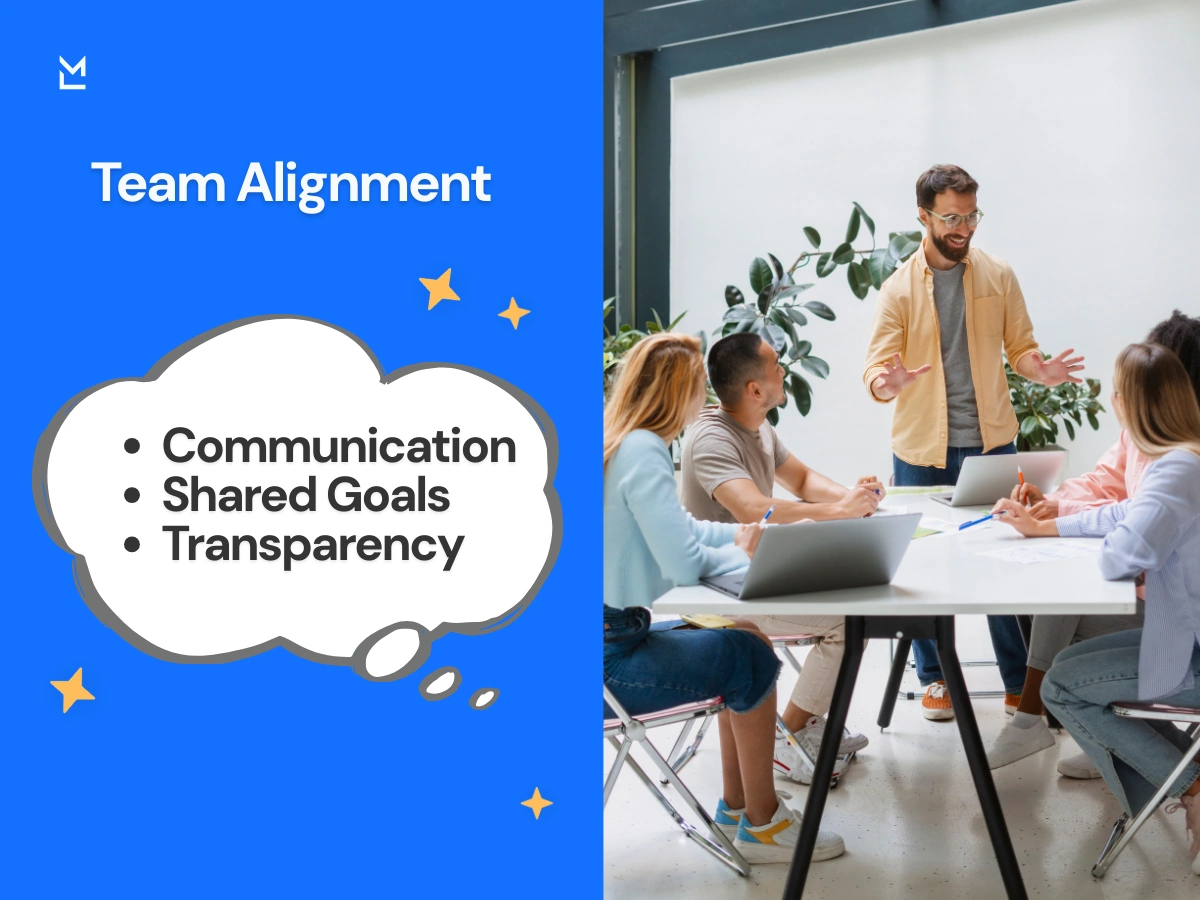
Keeping teams aligned requires regular communication across the entire organization. Leaders need to explain how each team's goals contribute to the overall success and strategy of the business.
Being able to communicate clearly is a big part of this process. When leaders can articulate their goals well, teams understand what's expected of them and stay focused on what they're trying to achieve.
Alignment also requires being transparent. Teams should understand how their performance goals influence things like customer satisfaction, revenue growth and other business objectives.
Good communication skills help teams turn strategic plans into work goals that they can actually do. Without good communication, employees might misunderstand what's important or miss key details.
Effective communication also supports constructive criticism and feedback. Teams can have open discussions about their challenges without damaging morale.
Clear communication encourages teams to share insights and progress updates regularly. This helps strengthen the connection between day to day tasks and longer term business goals.
In the end, good communication skills help organisations keep momentum and avoid confusion during complex projects.
Lots of businesses now see professional development as a key priority. Investing in employees' growth and development makes the whole organisation stronger and contributes to long term success.
Professional development often includes training programs, mentorship initiatives, and access to online course platforms. These resources help employees build new skills and expand their professional network.
Companies that put a strong focus on professional development often see higher employee satisfaction. Employees feel supported in their career goals and become more motivated to contribute to business success.
Professional development also gets teams ready to adapt to new technologies and industry trends that are changing fast.
Employees often feel more engaged when they understand how their work contributes to the company's success. Clear goals give people a sense of direction and purpose.
When organisations define meaningful career goals and professional development goals, employees see opportunities for advancement. This transparency can make a real difference in employee satisfaction.
Goal clarity also reduces workplace stress. Without clear priorities, employees can focus on making meaningful progress instead of worrying about unclear expectations.
In the end, aligned goals support both business success and personal growth.
Despite its benefits, goal setting can sometimes be a real challenge. Teams might struggle with shifting priorities, unrealistic expectations, or unclear ownership.

One common challenge is finding a balance between setting big goals and making sure they're realistic. Big goals encourage innovation, but unrealistic targets can reduce motivation.
Another challenge is measuring progress accurately. Without good data, teams might struggle to see how they're doing or make informed decisions.
Sorting out these challenges early on helps organisations stay focused and achieve positive outcomes.
Getting goals achieved successfully requires clear ownership. If responsibilities are unclear, progress slows down and accountability disappears.
Giving ownership means that specific team members are in charge of tracking progress and completing milestones. This encourages accountability and improves operational efficiency.
Clear ownership also makes communication a lot easier. Teams know who to go to if they've got questions or if progress stalls.
By defining responsibilities early on, organisations can do a lot to make sure their goals get achieved.
Financial goals are often a key part of business strategy. Revenue growth, profitability and operational efficiency are all important for staying competitive.
However, financial goals should be connected to broader strategic goals. Businesses that just focus on revenue might overlook important factors like customer satisfaction or service quality. Balanced goals aren't just a good idea, they're essential for sustained growth. Any organisation worth its salt will be tracking its financial performance as well as investing time and resources in professional development and innovation.
It's this balance that underpins long term success and lets companies stay relevant in fast changing markets.
These days, modern organisations rely on technology to manage those complex projects and keep tabs on how teams are performing. Digital platforms help businesses measure success and get everyone on the same page across different departments.
Collaboration tools, analytics platforms, and project management systems help teams spot when things are going off track, and catch any potential problems before they become major issues. And then there are the meeting documentation tools - if you've ever been to a meeting where the conversation turned to goals, you'll know how often the important bits get lost in the noise. That's where tools like meeting summaries and action items come in handy.
MinutesLink is a particularly useful tool for this type of thing. It'll automatically churn out a meeting summary and any action items, so you can revisit them later and stay on track with those strategic goals.
Let's face it, business environments are in a constant state of flux. New technologies, market trends, and customer expectations can all force companies to change direction in the blink of an eye.
When this happens, teams need to stay focused on the end goal, even when priorities change out of all recognition. Going back to the drawing board and reviewing the goal setting process is a great way for leaders to adapt to new circumstances while keeping everyone on the same page.
Companies that make a habit of reviewing their goals regularly are usually the ones that can respond to change the best. They can adjust their business strategy and make sure that long term aspirations aren't forgotten in the mix.
This flexibility helps companies keep up momentum and make meaningful progress.
Stretch goals are a great way to push your team beyond what they think is possible. These challenging targets encourage creativity and experimentation - and even if you don't hit the target, you'll often learn something new that can be used to improve operations or service quality.
However, it's worth remembering that stretch goals need to be balanced with achievable milestones. If you're asking your team to do too much too soon, you'll just end up demotivating them.

Organisations that get the balance right - ambition vs practicality - usually find that they achieve greater business success in the long run.
Now, we all know that numbers are important - but success is more than just financial results. Companies need to think about qualitative factors like employee and customer satisfaction too.
Customer satisfaction is all about how well you meet client expectations. Improving service quality usually leads to stronger relationships and - in the long run - real business success.
Employee satisfaction is more about the internal culture and whether employees feel like they're getting the opportunities they need to develop their careers. Companies that support their employees' career aspirations usually end up with more resilient teams.
Looking at both sides of the equation gives you a much more complete picture of how well you're doing.
The way we work is changing fast - remote work, digital collaboration, and automation are all forcing teams to rethink how they do things. And that includes goal setting.
In the future, goal setting is likely to rely more and more on data analytics and collaboration tools. Teams will be tracking progress in real time and adjusting strategies accordingly.
Professional goals will evolve too, as employees develop new skills to stay competitive in a world where technology is driving change.
Organisations that adapt their goal setting strategies to the new technologies will be better positioned for long term success.
At the end of the day, organisations that succeed at achieving goals are those that create a culture that supports it from the ground up. Leaders communicate clearly what the strategic priorities are and encourage collaboration across teams.
Employees need to understand how their professional goals fit into the bigger picture. They need to feel empowered to pursue their own development and know that their work is contributing to the company's success.
Regular feedback, open communication, and structured goal tracking - these are the things that keep teams aligned even as priorities change.
When you combine clear work goals, effective communication, and strong leadership, you get an environment where meaningful progress and long term success become real possibilities.
Work goals are basically just a series of objectives that help teams keep their noses to the grindstone, churning out meaningful work. They bridge the gap between individual tasks and the bigger picture - the business strategy. When your work goals are clear cut, it's much easier to stay on track as a team, measure how you're doing, and keep momentum going even when things get tough.
Teams tend to set work goals by following a bit of a plan - defining what they want to achieve, who's in charge, and what needs to be done by when. Some organisations even use something like SMART goals to make sure they're not setting themselves up for disaster.
Short term goals are all about getting stuff done within a few weeks or months - think improving customer satisfaction or just wrapping up a project. Long term goals are about making a real dent in the universe - like growing revenue, expanding into new markets, or just plain old long term success. Both kinds of goals are vital to keeping you moving in the right direction.
Teams track their progress by keeping an eye on results, metrics and holding regular check ins. If you've got some tool that captures what's been discussed in meetings, even better - you can go back and see what was agreed on and where things stand.
Work goals give employees a chance to grow and develop as pros, and pick up new skills along the way. They often include stuff like career aspirations - what you want to be doing in a year or 5 - and just general development plans. When companies back their employees goals, everyone ends up happier and more successful in the long run.
Trusted & Secure


.webp)



.webp)
.webp)
.webp)
%201%20(2).jpg)