Written with help from MinutesLink - free AI meeting notetaker for online meetings.
Written with support from MinutesLink — a free AI notetaker for online meetings.
Lots of people get emotional safety mixed up with being comfortable but the thing is, it's really about getting permission to just be. Permission to ask questions, to admit when you're unsure and to show up as a human being, with all your quirks and flaws, rather than some kind of polished idealisation. In a remote team, that permission is a lot harder to get because all your interactions are through screens, different time zones and asynchronous comms. So the team culture, which is usually reinforced by those casual chats down the office corridor or in the break room, gets built into the systems and habits you use for communication.
When emotional safety is in place, staff feel like their contributions are valued, even if they're not the loudest voice in the room. But when it's not, it creates these invisible barriers to communication - people start to hold back, disengage or stick to the bare minimum. Over time, that can have a real impact on employee satisfaction and employee morale - and the kind of team culture that develops.
Remote management just amplifies all the issues that already exist in a traditional workplace. Power dynamics feel even more pronounced, misunderstandings can drag on forever and the risk of misinterpreting silence is higher than ever. Managers often assume that as long as no one is complaining, everything is okay. But the reality is that a lot of staff just stop sharing when they don't feel emotionally safe.
For remote employees, emotional safety is inextricably linked with trust in internal communications. Without regular two-way communication that really feels genuine, people start to self-censor. That doesn't mean all conflict disappears - it's just that it goes underground. Communication suffers and it's often only by the time things start to get visible that morale and engagement have already started to tank.
Employee engagement ideas often focus on activities, tools, perks and whatnot, but emotional safety is what makes or breaks those ideas actually working. A genuinely engaged workforce isn't just about slapping on some surface-level initiatives. It grows when staff feel seen, heard and respected in all their day-to-day interactions.

When emotional safety is low, even the most creative employee engagement ideas can fall flat. People may go through the motions but without any real connection. Engaged employees aren't just busy or compliant - they're emotionally invested. And that investment only happens when people feel safe to express their ideas, concerns and even mistakes without fear of judgment or exclusion.
Remote work promised equal footing for everyone but the reality is that a lot of teams still struggle with unequal participation. Introverts get described as quiet but that's not the same as saying they're not engaged. In teams where emotional safety is there, introverts can contribute thoughtfully and consistently. In those where it's not - they just disappear from conversations altogether.
Team meetings in remote settings can unintentionally reward being the loudest and most confident voice over just plain old reflection. Without any specific effort to make space for different communication styles, the same few voices tend to dominate while the rest retreat. Emotional safety is key to reversing that - by making sure different perspectives and communication styles can coexist.
Digital tools make collaboration possible but they also create new communication barriers. Tone gets lost, pauses feel awkward, misunderstandings drag on longer without clarification. Over time, these little frictions can really start to affect how staff feel connected to the team.
When emotional safety is in place, people clarify instead of assuming - they ask questions instead of just backing off. That trust supports knowledge sharing and continuous learning. When it's weak, every interaction feels a bit of a risk. This tension can really eat into productivity and energy that should be going into innovation and problem-solving.
The work environment is not just physical or digital - it's emotional too. It's shaped by how we give feedback, how we handle mistakes and how we explain decisions. In remote teams, the emotional layer of the work environment becomes way more important because people spend so much time alone with their thoughts.
Staff feel safer when expectations are clear and when context is shared openly. Emotional safety grows when communication feels predictable and fair rather than arbitrary. When the communication is consistent, staff can feel connected even when they rarely meet face to face.
Lots of organisations talk about shared values but team culture shows up in all the little moments. It's who gets invited to speak, whose ideas are acknowledged, how disagreement is handled. Emotional safety is what turns values into actual behaviour and is essential to building a strong team culture.
A good team culture isn't about constant positivity - it's about creating room for discomfort, debate and growth. Emotionally safe teams can have tough conversations without breaking trust. Over time, this creates a great team culture that supports learning rather than just avoiding tension.
High-performing teams are often talked about in terms of their achievements, but their internal dynamics are just as important as what they're actually getting done. Emotional safety lets team members feel free to take risks, challenge the status quo and learn from failures without worrying about getting burned.
In remote work environments, high-performing teams rely heavily on trust - they don't need to be right next door to each other to get things done. When you've got emotional safety in place, team performance improves because people are focused on solving problems rather than shell-protecting themselves. And that creates momentum that supports organizational success.
Frequent communication isn't about bombarding people with messages all day long - it's about setting up a reliable rhythm where people know exactly when and how information is going to be shared. Emotional safety grows when communication feels like it's being done on purpose, rather than just reacting to whatever crisis is happening right now.
Remote management really benefits from communication that acknowledges people as human beings, rather than just treating them as tasks to be ticked off on a to-do list. When leaders take the time to explain what they're doing and invite questions, employees feel like they're valued. And that sense of being included strengthens relationships even across distance.
An inclusive culture isn't just about having policies in place - it's about the way people interact with each other every day. When people feel respected, regardless of their role or background or how they communicate, that's what builds a more inclusive workplace. And emotional safety is what makes that happen in practice.
Remote work can either draw people together or push them apart. Emotionally safe environments help make sure that diverse perspectives aren't just present, but actually get integrated into decision-making. That inclusion helps to strengthen both team culture and innovation.
Knowledge sharing relies on trust - if people think they'll get shot down, they're going to be pretty tight-lipped. Emotional safety makes it easier for people to share what they're thinking, even if they're not entirely sure they're right.
In remote teams, knowledge sharing is even more critical because people aren't bumping into each other in the hallway as much. When emotional safety is high, people are more willing to ask questions and share ideas without overthinking it. That supports continuous learning and professional growth.
One thing that's often overlooked about emotional safety is how conversations are remembered afterwards. Sometimes when meeting outcomes are recorded selectively, people worry about being misquoted or ignored. AI-generated meeting notes can help by creating a shared, neutral record of what was discussed.
Tools like Minuteslink support emotional safety by taking the pressure off of people to constantly restate or defend their contributions. When conversations get accurately captured and are easy to access, team members can focus on contributing rather than protecting themselves. And that subtle shift helps introverts and remote employees feel more secure in speaking up.
Not all employee engagement ideas need to break the bank. In fact, simple ideas like recognition, shared reflection or just having some casual catch-ups can be incredibly powerful when emotional safety is in place. But when it's not, even fun employee engagement ideas start to feel forced and people only go through the motions.
This is where emotional safety comes in - it lets people participate in a genuine way, without feeling like they're walking on eggshells.
Employee recognition is more than just praising someone for a job well done. It sends a signal about whose contributions matter - and in emotionally safe environments, recognition feels fair and motivating. But in ones where it's not, recognition can feel like it's being handed out unfairly.
For remote teams, this is especially true - visibility is uneven and people can feel like they're not getting the recognition they deserve. Emotional safety helps ensure that recognition builds morale instead of causing resentment - when people trust the system, recognition reinforces engagement and is good for the whole team.
Making employees feel valued isn't just about praise - it's about being consistent, following through on your promises and being transparent. And when employees feel like you're being genuine and not just putting on a show, emotional safety starts to grow.
Remote managers can do a lot to reinforce value without feeling like they're spying on their team. And when employees feel trusted instead of monitored, their autonomy increases - which is closely tied to job satisfaction and long-term employee retention.
Work-life balance is a scheduling issue, right? Wrong. It's also about feelings. Employees who feel emotionally safe are more likely to set boundaries and communicate their needs. But those who don't often overcommit because they're worried about what others will think.
Remote work can be a real blur between personal and professional lives. But emotional safety helps teams navigate this by normalising honest conversations about capacity. And that's good for everyone.
Team meetings are one of the few shared moments remote teams get to experience together - and what they're about emotionally matters just as much as what's on the agenda. Meetings that prioritise getting things done over inclusion can end up silencing quieter team members.
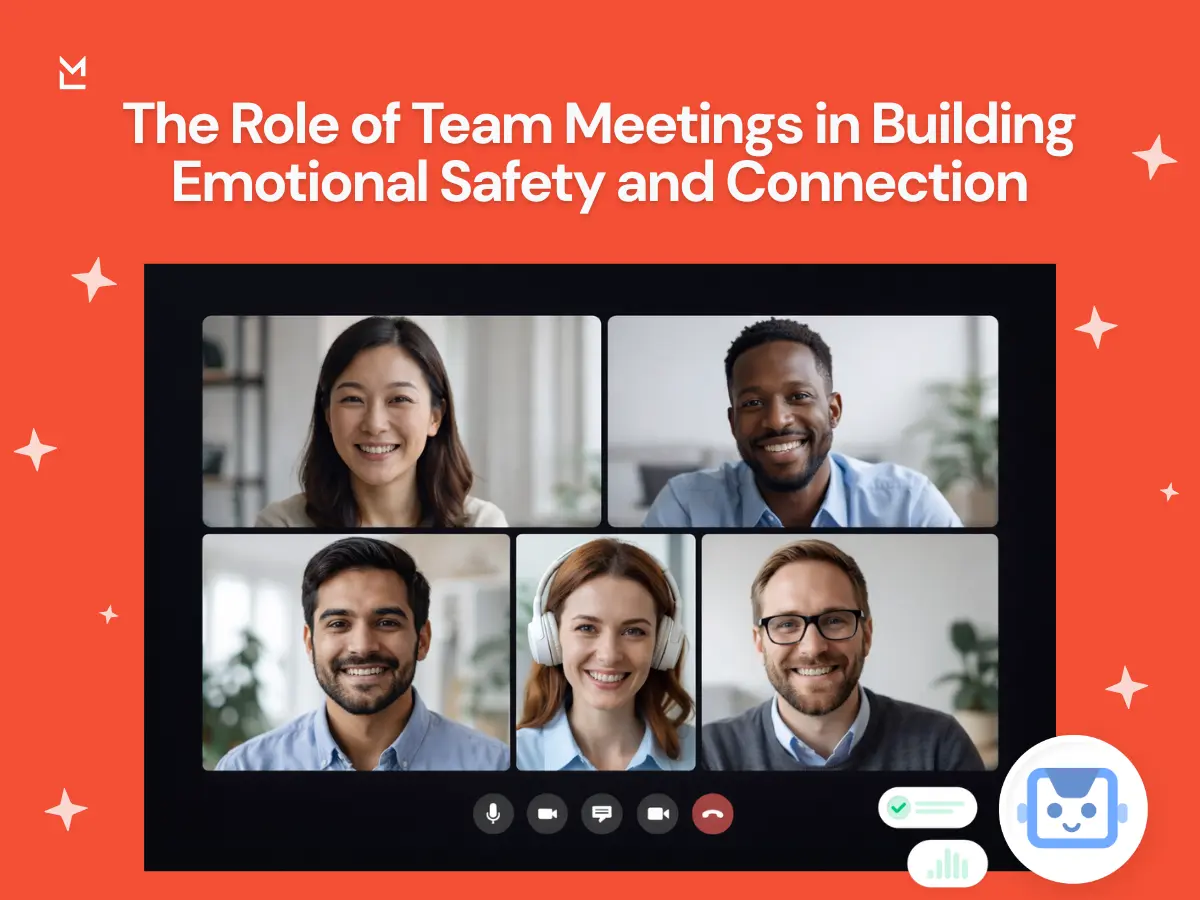
Emotionally safe team meetings are a different story. They invite participation without making people feel trapped. People feel free to change their mind, build on others' ideas or just think out loud. And that's when relationships start to feel strong and employees feel connected.
Knowledge continuity is all about trust. When people trust that their contributions are being taken care of accurately, they're more willing to share their insights. Emotional safety helps build that trust in the first place by reducing people's fears of being misunderstood.
With AI-helped meeting notes, you can really start to see how this works. You're creating records of discussions that everyone can agree on, which means you're no longer relying on individual memories to figure out what happened. And that's huge for collective learning.
Growth is complicated. New people join the team, roles change, and processes get updated - it all gets to be a lot to deal with. But emotional safety can really help ease that transition by making sure your team stays connected as a unit.
Remote teams that are growing quickly can benefit a lot from emotional safety because it helps people fit in right from the start. New people feel like they belong from day one and can start getting up to speed right away. And that's when you start to see real alignment and engagement.
The thing is, performance and emotional safety aren't at all mutually exclusive. In fact, emotional safety actually helps you perform better because it lets people be at their best without feeling anxious or stressed.
Managers who balance clear expectations with empathy are basically creating a high performing team culture that can perform at a high level without sacrificing anyone's well-being. People feel accountable for their work, but they don't feel threatened.
Remote work is no longer a temporary thing - it's how people work these days. And that means emotional safety is becoming a super important factor in determining which companies are going to thrive in this environment.
Companies that put a real effort into emotional safety right now are setting themselves up for success when it comes to getting and keeping talented employees, and driving real innovation. Anyone who ignores it is basically courting trouble and risking losing the trust of their team.
Tools have a way of influencing what feels normal for people. If your tools are helping you be transparent and share info, then you're naturally building more emotional safety. But if they're obscuring what's going on, then you're just making things more uncertain.
Minuteslink does some of this by turning meetings into shared memories rather than just individual opinions. By capturing the discussion in a way that's accessible to everyone, you can reduce all the emotional friction that comes from not being able to agree on what happened.
Emotional safety isn't something soft or fluffy - it's a real strategic asset that can really impact how well your team does in terms of engagement, retention and performance. And that's why companies that treat emotional safety like it's part of their system - rather than just an afterthought - are going to see real benefits.
Remote teams actually thrive when they integrate emotional safety into what they do every day. And over time, that means you end up building a strong team culture that really supports long-term growth.
Emotionally safe remote teams are building something real - they're creating shared understanding, preserving knowledge, and supporting connections across distance.
In a world where work is getting more and more distributed, emotional safety is not optional - it's what gets you the teams, the workplace culture and the organizational success you need.
Emotional safety at work means being able to speak your mind without constantly wondering if you're going to be treated like an idiot for saying something you think you should say. It's that sense of security where you can ask a question, admit you don't know something, or toss out a half-baked idea - and still be treated with respect.
It matters because let's face it: people just don't perform at their best when they're always trying to deflect criticism or throw a shield up to protect themselves. When there's a healthy dose of emotional safety, employees are way more likely to contribute openly, collaborate naturally, and bounce back from mistakes a whole lot faster. And without it? Well, teams may be super busy on the surface but just quietly losing trust, creativity and motivation underneath.
Employee engagement ideas are totally more effective when they focus on how your people are feeling - not some flashy activity or perk. In remote teams, it's not about designing the most entertaining team-building exercises or throwing out the latest trendy perk - it's about clarity, trust and feeling like your voice matters.
Ideas that actually work usually make employees feel like they're being heard and valued in the day-to-day, not just when it's time for a special event. Simple things like clear communication, recognition that actually feels fair, and giving people space to contribute in their own way will go way further than any of those one-off initiatives that just ignore the emotional context.
Team culture in remote organisations develops over time because of the patterns and habits you set in place - not because you all happen to be working in the same office. It's actually shaped by the way you make decisions, give feedback, and whose voices get included in all the important conversations.
Without all that shared physical space, culture lives in the ways you communicate, the messages you send, and the systems you put in place. Over time, your team starts to learn what feels safe, what gets rewarded, and what gets completely ignored. A strong team culture forms when those signals are consistent and authentic - when people feel respected even when they disagree or make a mistake.
Communication barriers in remote teams usually come down to missing context - not because people are being deliberately obtuse. The fact is, tone gets lost in translation, silence can mean just about anything, and short messages can be super easy to misread.
When people don't feel emotionally safe, they just stop asking for clarification and instead start making all sorts of assumptions. And before long, this creates distance, misunderstandings and frustration. Reducing communication barriers usually means creating some clearer shared context and making it easier for people to ask questions without having to worry about being shot down.
Remote management is harder because it takes away all those little informal signals that managers usually rely on. They can't just sense when someone is hesitant or stressed just by looking at a screen, and silence can mean just about anything.
Without a whole lot of intentional communication and trust-building, employees might just stop sharing their concerns altogether. Effective remote management requires setting clearer expectations, thinking more carefully about how you communicate, and getting systems in place to support transparency - not more control. When you get it right, it can actually create some pretty resilient teams.
Trusted & Secure


.webp)



.webp)
.webp)
.webp)
%201%20(2).jpg)