Written with help from MinutesLink - free AI meeting notetaker for online meetings.
Written with support from MinutesLink — a free AI notetaker for online meetings.
For years companies have put a premium on knowledge as a strategic asset, but the info systems & management structures we have now are just too bloated to make do without putting in some serious effort. As teams expand, remote work becomes more normal, & workflows get that much more complex, knowledge becomes the currency that makes or breaks organizational success. Employees need quick & easy access to the knowledge that comes from experience, including both explicit knowledge and experiential knowledge, & a clear understanding of how the organisation manages its brains trust, tackles specific tasks, & coordinates departmental chit-chat.
A cracking knowledge base helps with information governance, smooths out coordination, & makes teamwork between people who've never met in person a breeze - it removes communication barriers by making information easily digestible rather than labouring under some kind of bureaucratic weight. Companies that get this right are unlocking new ideas, driving innovation, & creating an environment where employees can spot opportunities & solve problems way more efficiently.
When a company starts using AI generated meeting summaries in their workflows, something fundamental shifts. Theyre no longer relying on hazy memories, scattered docs, or one person's gut feeling. Over time, this becomes a solid foundation for better information sharing, more effective knowledge transfer, & a more resilient management team system that supports the whole operation.
Traditional knowledge transfer methods rely on conversations, training docs & mentorship - they often rely on the top brass who've got the knowledge that new recruits need to get up to speed. This creates bottlenecks because these people have to drop everything to explain things, walk through systems, or answer the same questions over & over about workflows, responsibilities, & expectations. Its like trying to build a plane while still flying it.
The knowledge transfer process only gets more complicated when comms happens across time zones or remote employees are relying on comms that happen without everyone being in the same room at the same time. Important details get lost in emails, chat threads or Google Docs that never get updated - even when organisations try to collect knowledge systematically, they often struggle with consistency & end up with a load of fragmented insights rather than one cohesive picture.
Companies need solutions that support continuous transferring knowledge, not just onboarding or training - they need tools that collect knowledge automatically, turn it into something useful & integrate it into the information systems that people actually use every day. That's what makes AI-generated notes so valuable - they help organisations streamline workflows, boost efficiency & preserve the knowledge that matters at the same time.
AI-generated notes change the way teams interact with information by capturing meetings, discussions, decisions & problem solving sessions in a way that makes sense. They remove the need for team members to faff around with note taking templates or worry about missing important info during conversations. When AI tools summarise meetings neatly & accurately, team members can focus on the bits that really matter - collaboration & comms rather than documentation.
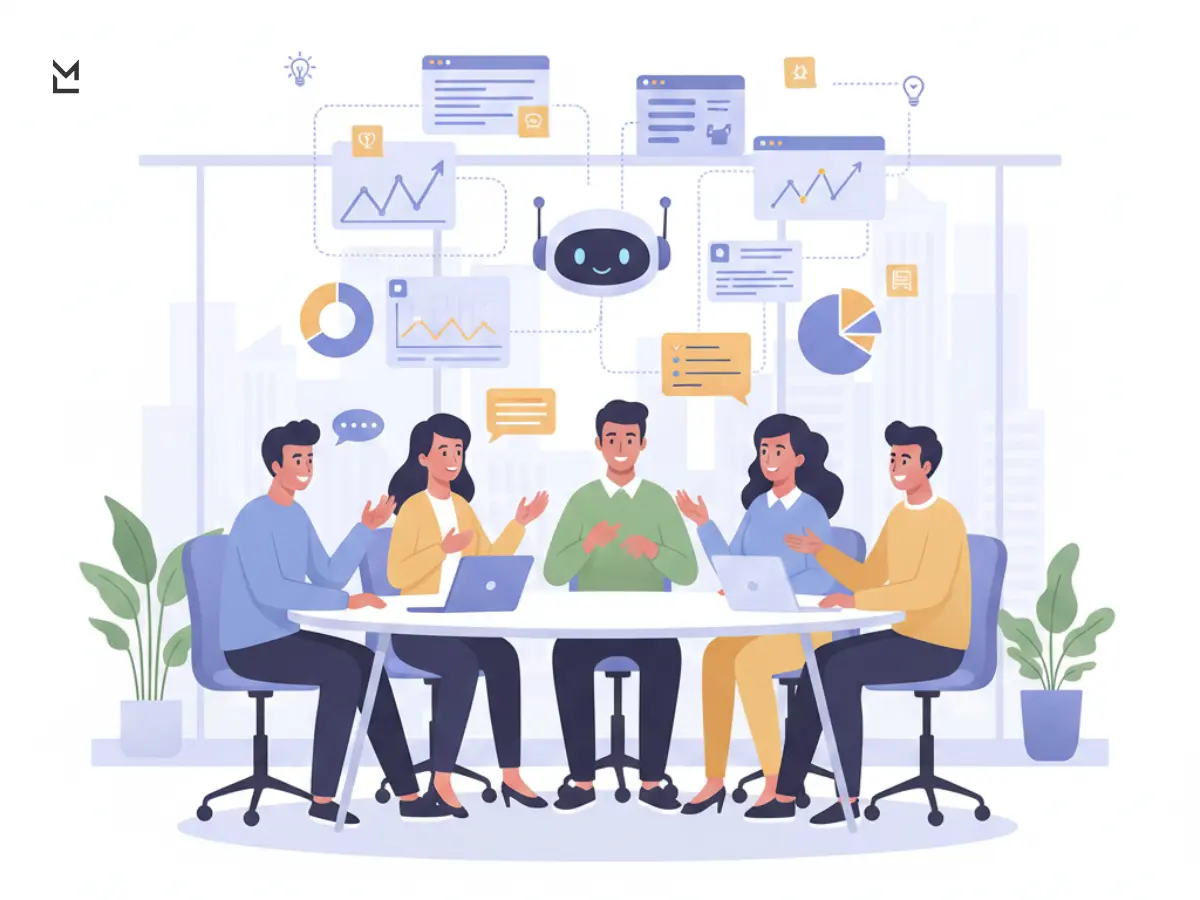
One of the biggest advantages of AI-generated notes is their ability to help knowledge sharing activities across the whole organisation - instead of relying on employees to share info manually, the system captures, organises & stores it in real time. This means that critical knowledge is less likely to disappear when people leave or move to new roles. It also keeps everyone on the same page by making sure everyone has access to the same info.
When companies use these summaries consistently, they naturally build a knowledge base that supports training, development & cross-department comms. AI-generated notes become a sharing mechanism that keeps teams connected, allows them to manage info efficiently & supports transparency & better decision making.
When you rely mostly on meetings to get things decided and sorted, sharing knowledge between departments can get a bit patchy. But AI-generated meeting notes save the day by grabbing all the important bits from the discussion - decisions, action items etc - and structuring it into notes that can be used across the board.
Rather than spending ages documenting your processes or re-explaining things to new joiners, teams can use meeting notes as a living library of knowledge. Over time, this builds a searchable knowledge base that's actually based on conversations, not some static document - this helps stop information getting lost and keeps departments working in sync with each other.
The worth of a company's knowledge base really boils down to how clear, accurate and consistent its information is. When that kind of knowledge base is well put together, it makes it easy for team members to understand how things work, navigate the company's internal systems and collaborate more effectively. The key here is that AI-generated notes are what make this all possible, by taking the discussions from meetings and turning them into actionable insights across departments - whether it's ops, marketing or project management. These notes become the backbone of the knowledge base, documenting everything from the everyday tasks to the long term strategies. They help teams stay on top of their progress, monitor progress, make sure everyone is singing from the same hymn sheet and understand the reasoning behind decisions. And then, weeks or months down the line, when employees go back to these documents, they can easily pick up where they left off and remember the context and expertise that would otherwise have slipped their minds.
The real revolution that comes with using AI summaries is how they bring order to what would otherwise be a complex mess of information governance practices. They ensure that data is captured in a way that makes sense, stored securely with proper information security and shared in a way that actually supports the company's knowledge base, rather than just dumping a load of unstructured info on employees.
When onboarding new employees, getting them up to speed on the company's processes is one of the toughest parts of the job. They need to figure out the company's communication style, the tools they use, the existing processes that shape daily work, and what's expected of them in their role. Without some decent documentation, onboarding can drag on for weeks or even months, slowing productivity and causing unnecessary stress.
But AI generated notes can really speed things up for new employees by giving them a clear view into how the organisation works. No more trying to piece together info that's scattered all over the place - they can access meeting summaries that explain the thinking behind decisions, the relationships between departments and the workflows that are driving ongoing projects. This makes it a lot easier for them to figure out how to contribute and reduces confusion about responsibilities.
MinutesLink, an AI assistant that gets integrated into meetings, really hits its stride when it comes to supporting new employees because it gives them accurate, organised summaries that help them get up to speed quickly. Not only does it make onboarding a heck of a lot smoother, but it also makes sure employees never feel lost in unfamiliar systems or jargon.
When you've got a good knowledge sharing culture going, it reduces frustration, accelerates innovation and strengthens relationships between employees. When info flows freely, employees don't feel isolated or dependent on gatekeepers for some insight. This creates an environment where leadership is all about open communication and where team members can collaborate without worrying about missing some detail.

Knowledge sharing isn't just about throwing info out there, though. It's about giving employees the confidence to access the resources needed, solve problems and participate in decision-making. When companies build knowledge bases supported by AI-generated notes, they create an environment that facilitates collaboration and increases efficiency across departments. Employees are able to contribute ideas more easily, communicate more effectively and feel more connected to the company's mission.
This cultural shift also makes a big difference in remote work situations, where employees might otherwise have to rely on spontaneous conversations or in-person meetings. The knowledge base gives them a solid foundation to go to for everything they need to understand ongoing projects, innovations and company priorities.
Information governance is a must for any company that deals with a lot of data, documentation and communication across multiple departments. It determines how organisations manage information, keep information secure and stay on top of compliance with industry standards. Without strong governance practices, companies risk losing valuable knowledge, mismanaging sensitive data or letting inconsistencies creep into their documentation.
AI-generated notes are a big help with information governance because they create structured, consistent documentation of business activities. They capture the key discussions, decisions and responsibilities in a way that supports transparency and accountability. This lets managers keep an eye on progress across teams, evaluate how effective their communication is and make sure info is flowing smoothly through the organisation.
The more companies use AI for documentation, the more unified their information management practices become. This helps organisations protect sensitive data while still making it easy for employees to access knowledge. And it gives them the confidence that the information they're relying on is accurate, up to date and in line with existing processes.
Workflow management is all about clarity, coordination and getting everyone on the same page. AI-powered notes help achieve that by writing down the nitty gritty details of each task, project and initiative - like who said what, when and how it fits into the bigger picture. When employees can access all the previous conversations in one place, they've got a much clearer understanding of how their piece of the puzzle fits in. AI is a total game changer when it comes to streamlining workflows. No more relying on memory or digging through old documents in a scattergun manner like we used to with Microsoft Teams or Google Docs. With a centralised knowledge base, organisations can easily get their hands on all the information they need to make sense of their workflows. This means problem solving is a whole lot faster, miscommunication gets ironed out, and less time is wasted redoing work because someone wasn't entirely sure what to do.
AI also helps organisations spot areas where things can be improved and evaluate how all the different processes are contributing to business outcomes. When that information gets added to the knowledge base, it gives everyone the chance to keep improving and innovating across departments.
Organisations that prioritise knowledge sharing and information governance are better placed to handle changes in the market, changes in new client needs and growth opportunities. A well-structured knowledge base becomes a trusted repository of expertise that guides employees through complex responsibilities, collaborations and projects across departments.
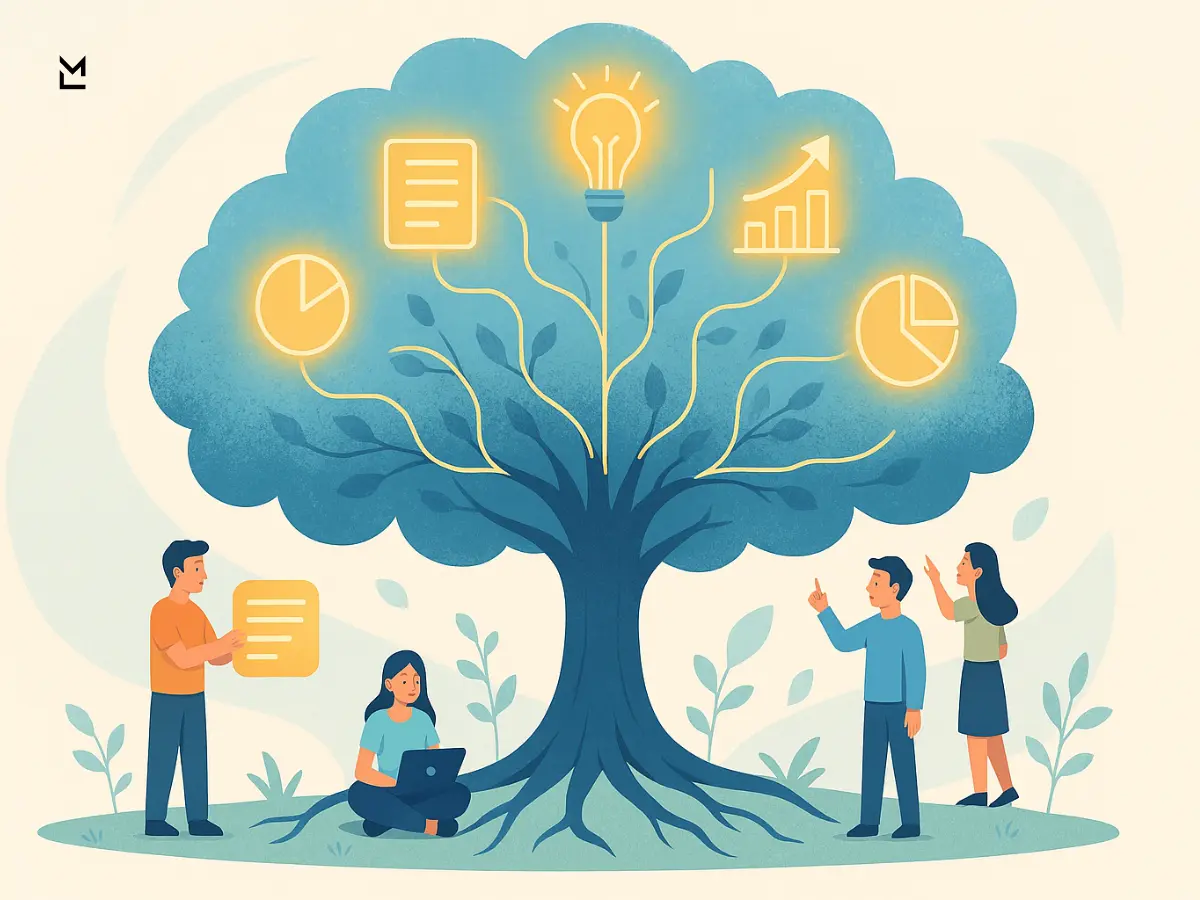
When employees have access to the information they need to get on with their jobs, they become more confident and capable. They spot opportunities, come up with new ideas and contribute to professional development initiatives. This leads to not just increased productivity but innovation too - right across the company.
Businesses that invest in AI-supported knowledge bases see real benefits - better decision making, reduced onboarding times and better alignment across teams. They also create a culture that fosters open communication, transparency and collaboration.
Communication gaps appear when teams aren't talking to each other - whether it's between departments, remote workers or different levels of management. AI-powered notes help bridge that gap by capturing the substance of conversations, so no one has to guess what others are expecting or trying to do.
These summaries bring team members from different locations and at different times together. They make sure everyone knows the reasoning behind decisions and has all the information they need to do their job. This means fewer misunderstandings, less duplication of work and a sense that everyone is on the same page.
AI also makes it easier to collect knowledge from meetings and share it with the right people. This promotes inclusion, builds trust and lets all team members participate fully in company activities.
In the midst of all this complexity, MinutesLink stands out as a tool that helps organisations capture, summarise and share knowledge accurately and clearly. It takes meetings and turns them into structured insights that support information governance, knowledge transfer and better collaboration across teams. MinutesLink's summaries give employees the confidence that they've always got the right information at hand, supporting a more efficient and aligned organisation.
Knowledge transfer isn't just about onboarding new staff - it's about the ongoing process of sharing and preserving valuable information. When organisations use AI-generated notes, they capture all the explicit and tacit knowledge that would otherwise be scattered or lost. This makes organisations more resilient and helps future employees start with a strong foundation.

A good knowledge base helps companies handle changeovers, onboard new team members and keep continuity even when employees move on or change roles. It supports both short-term workflows and long-term business goals by keeping important insights on record.
Organisations that prioritise knowledge transfer create cultures that value education, mentorship and continuous improvement. This helps drive business success and lets companies thrive in a competitive landscape.
AI-generated notes give more than just documentation - they provide opportunities for continuous learning. When employees revisit summaries of past meetings, they can learn from past successes and failures, understand why certain decisions were made, and refine their skills.
AI also makes it easier to spot patterns, track progress and see how different departments work together. This strengthens an organisation's ability to plan, innovate and adapt to new challenges.
A strong knowledge base supported by AI becomes a resource for growth, learning and improvement. It helps identify opportunities for training, develop strategies and creates an environment where employees feel supported and empowered.
Knowledge management in modern companies is more than just collecting information - it's about creating systems that support accessibility, organisation and effective use of knowledge. AI-generated notes help organisations build these systems by making sure that information is captured consistently and stored in a knowledge base that people can trust.
Good knowledge management supports business planning, improves operational efficiency and strengthens collaboration across departments. It gives employees the tools they need to make a meaningful contribution and helps leaders make informed decisions based on accurate data. As companies put more and more faith in the latest tech, knowledge management starts to look less like a mere requirement and more like a key differentiator - the thing that sets you apart from the competition and lets you truly grow, innovate and make it to the top.
The future of a company's collective knowledge - that's the sweet spot where tech meets comms meets teamwork - & a lot of what that future holds is going to be written by AI generated notes . They swoop in, snag the bits of info that would otherwise get buried, make sense of it all, & suddenly everyone in the company can get the info they need when they need it.
Minutelink is helping make all this new knowledge sharing magic possible - by giving teams a seriously powerful way to pin down the conversations that actually matter, cut through all the noise, & bring some much needed clarity. By throwing AI generated notes into the mix, companies can build these massive knowledge bases that show off just how deep their expertise goes , how much is going on in their offices & most of all the potential thats waiting on the horizon.

As more & more businesses buy into this whole new era of sharing knowledge, they create workplaces where people feel like theyre connected, in the know, & actually able to do their jobs. They build a culture where conversations are valued, people respect each others smarts & genuinely enjoy working with each other - and of course, they make sure the knowledge that makes their business tick isnt just sitting on some dusty shelf, but is instead always being built on, refined & shared around.
Knowledge transfer is the process of taking the experience, insights and know-how from one person or team and passing it on to another. To put it in simple terms, it’s about making sure important information isn’t just floating around in Sarah’s head but is accessible to everyone. This might involve documentation, onboarding materials, meeting notes, internal training sessions or just casual chats where people pass on what they know. If knowledge transfer is done well, it prevents companies from losing out on expertise when people change roles or leave.
Information governance is all about the rules and systems that govern how a company handles information - where it’s stored, who can access it, how it’s protected, and how long it should be kept. Think of it like an office with a decent filing system: every document has its place, sensitive stuff is kept locked away and nothing gets lost. A good information governance system prevents chaos and reduces the risk of security breaches.
Workflow management is all about setting out how work flows from one step to the next - making sure everyone knows what needs to happen, who is responsible and what the order should be. When done right, workflow management gets rid of bottlenecks, stops people repeating work and helps teams work together smoothly rather than constantly fighting fires.
Knowledge sharing is basically the culture and habit of swapping information within a team or organisation. It’s not just about formal documents - people can share quick notes, helpful messages, mentorship or insights after a meeting. At its core, it’s about helping the whole team get smarter by bringing together individual expertise. When people are willing to share, collaboration improves and problems get solved a lot faster.
Creating a note taking template is easier than you think. The key is to keep things simple and practical
Trusted & Secure


.webp)


.webp)
.webp)
.webp)
%201%20(2).jpg)